The Flow That Got Away On AI agents, multitasking, and what we might be losing as designers
As AI agents replace the manual "doing" in design, we are gaining velocity but losing the restorative power of flow. This post explores the cognitive cost of multitasking in the age of automation and why protecting our deep focus is more critical than ever.
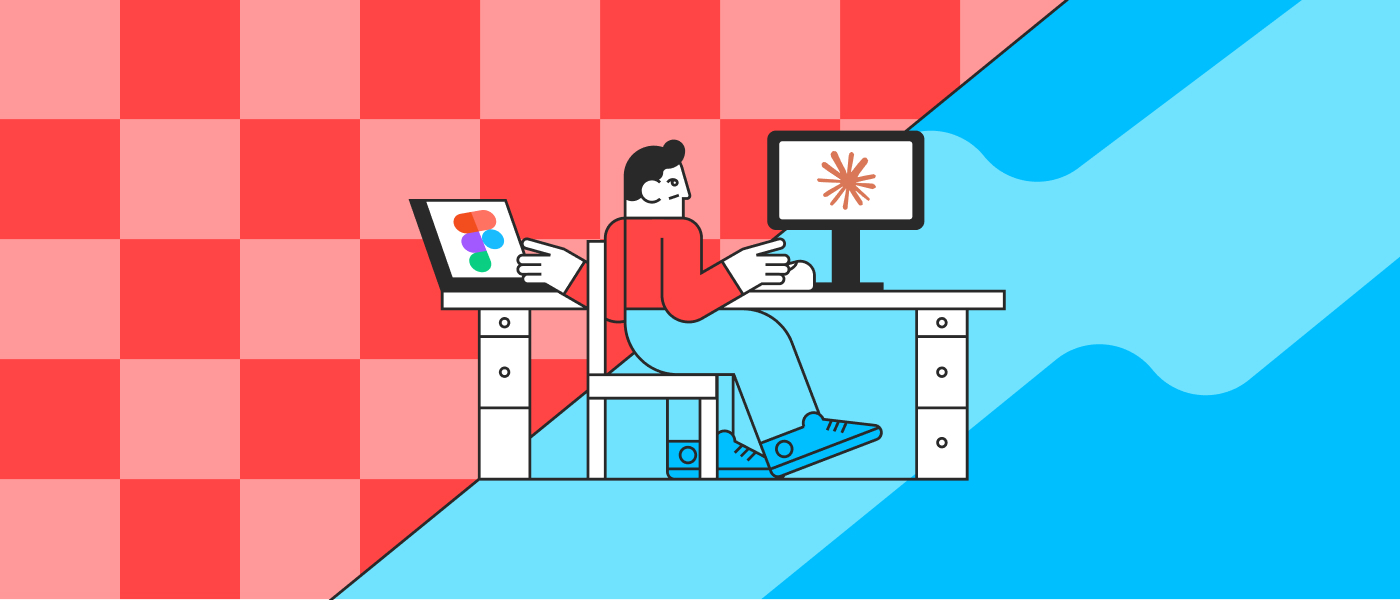
There was a time when I'd sit down at my desk, open Figma, and look up three hours later genuinely surprised. Not because I was bored and scrolling. Because I was in it. Deep in a user flow, interrogating every transition, obsessing over spacing, reconsidering the information hierarchy for the fourth time — and loving every second of it.
That's what made me fall in love with design in the first place. Not the deliverables. The state.
Psychologists call it flow. Csikszentmihalyi described it as a complete absorption in a challenging activity, where self-consciousness fades and time distorts. For designers, Figma became a kind of portal to that state. You'd enter a problem, and the outside world would simply stop mattering.
Now I run agents.
I write a prompt, attach a design system, and let the machine generate. While it works, I open another tab, queue another prompt, maybe respond to a Slack message, check the output of the first agent, give feedback, start a third.
This is not flow. This is multitasking with extra steps.
And the thing is — the machine is impressive. The outputs are often genuinely good. The speed is undeniable. But I've noticed something quietly uncomfortable: the waiting is intolerable to me now. I won't sit and watch the context window explain what it's building. I won't lean back and think through the user flow while the agent works. I can't. The gap between prompt and output has become dead time I feel compelled to fill.
That compulsion is the tell.
Flow requires single-tasking.
It requires a problem complex enough to absorb you, feedback tight enough to keep you engaged, and — crucially — the absence of interruption. Parallel agents structurally destroy all three conditions. You're never deep enough in one thing. The feedback loop is broken into: prompt → wait → evaluate → re-prompt. And the interruptions are baked into the workflow.
What we've gained in throughput, we may be losing in depth.
There's a psychological cost here that we're not talking about enough. Multitasking — real multitasking, not the romanticized version — is cognitively exhausting in ways that flow is not. Flow is restorative. It's one of the few working states where you finish tired but satisfied. Multitasking leaves you drained and vaguely anxious, even when you've technically been productive.
I worry we're building design workflows that are optimized for output velocity and subtly hostile to the human doing the work.
The honest question is: will any part of AI-assisted design ever generate that flow experience?
Maybe. There are moments — when you're crafting the right prompt and it requires genuine systems thinking, or when you're reviewing outputs and pattern-matching against years of intuition — that feel like they could become their own version of absorbed focus. A different kind of craft.
But right now, we're in an awkward adolescence. The tools are fast enough to replace the doing, but not sophisticated enough to replace the thinking. So we've removed the doing — the thing that created the conditions for flow — without having anything to replace the experience it generated.
What's left is a lot of prompting, waiting, and evaluating. Which looks like leverage. And is, financially. But it's not the same thing.
I think we'll romanticize it.
The way photographers romanticize the darkroom. The way writers romanticize the typewriter. Not because the old way was better, but because it was whole — a complete loop of intention, execution, and feedback that happened inside one human, at one pace, in one state of mind.
Design is changing. We know this. The question I keep coming back to isn't whether it will change, but whether we'll build the new version of it consciously — asking what kind of psychological experience we want design work to generate — or whether we'll just follow the productivity metrics and wonder, a few years from now, why the job feels hollow.
The flow didn't disappear because AI showed up. It disappeared because we stopped protecting the conditions that created it.
That's worth thinking about. Preferably, without opening another tab.